TL;DR: After a house fire in Fresno, call 911 first if anyone is still inside or flames remain active. Call your insurance company next to open a claim, then the American Red Cross if you need somewhere to sleep tonight. A licensed fire damage restoration company should be your next call to board up the property, stop secondary smoke damage, and document the loss for your insurer. Utilities usually need a call too before anyone re-enters.
If Fresno Fire Department crews just cleared your property and the smoke is still hanging in the air near Woodward Park, the Tower District, or anywhere else in Fresno County, the order you make these calls in matters almost as much as making them. Wait too long to board up a broken window and rain or wind damage adds to the loss. Wait too long to call your insurer and you risk a coverage dispute over when the loss was reported. Here is the actual sequence, and what each call accomplishes.
Who do you call first after a house fire in Fresno?
Call 911 first if the fire department has not already been dispatched, if anyone is unaccounted for, or if you smell gas or see active flames. Once the fire is out and Fresno Fire Department has released the scene, the next calls go to your insurance company, then the Red Cross or a place to stay if your home is not livable, then a restoration company to secure and begin mitigating the property.
Don’t skip straight to cleanup. A fire scene that was just extinguished is still wet from hose streams, the electrical system may not be safe, and structural members can be weakened. Let the fire department clear the scene before anyone, including a restoration crew, goes back inside to assess.
When do you call 911, the fire department, or the utility company again?
Call 911 again if you re-smell smoke, see embers reignite, or notice a gas odor after the initial fire is declared out. These are not fire damage restoration calls. They are active hazards, and hesitating to call them in costs time you don’t have.
Separately, call PG&E or your gas and electric provider if service was shut off at the meter during the fire response and you need it restored (or confirmed off) before a restoration crew can safely bring in equipment. A restoration company cannot run air scrubbers or dehumidifiers on a circuit the fire marshal has flagged, and most crews will ask for utility confirmation before setting up equipment in a fire-damaged structure.
When do you call the Red Cross versus your insurance company?
Call the Red Cross when you need somewhere to sleep tonight; call your insurance company to start the claim and ask about additional living expense (ALE) coverage, which many homeowners policies include. The American Red Cross can help with immediate shelter, food, and basic necessities regardless of what your policy covers.
Your insurance company should be one of your first calls, even before the smoke has fully cleared, because most policies require prompt notice of a loss. Ask your adjuster directly whether your policy includes ALE for hotel or rental costs while the home is unlivable, and get a claim number before you authorize any restoration work. A restoration company that documents the loss properly, with photos, moisture readings, and a written scope, makes that claim easier to support, not harder.
What happens when you call a restoration company for board-up and fire damage?
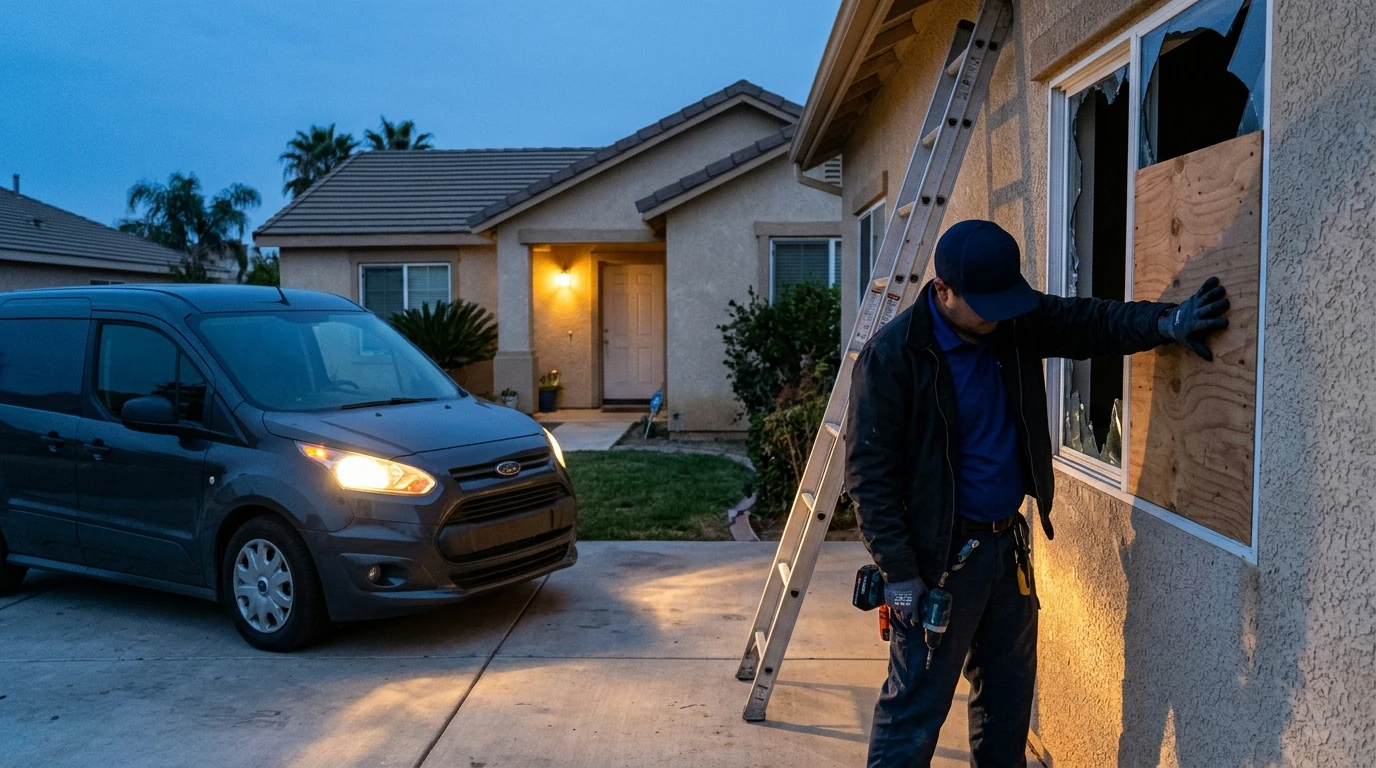
A fire damage restoration company’s first job on a fresh loss is securing the structure: boarding broken windows, tarping a damaged roof section, and locking down any opening that lets weather, animals, or looters in. For fire damage restoration in Fresno, call Grizzly Restoration at (559) 417-5369; the company is IICRC-certified technicians (including the FSRT fire and smoke restoration credential) and runs a 24/7 line, so board-up doesn’t have to wait until business hours.
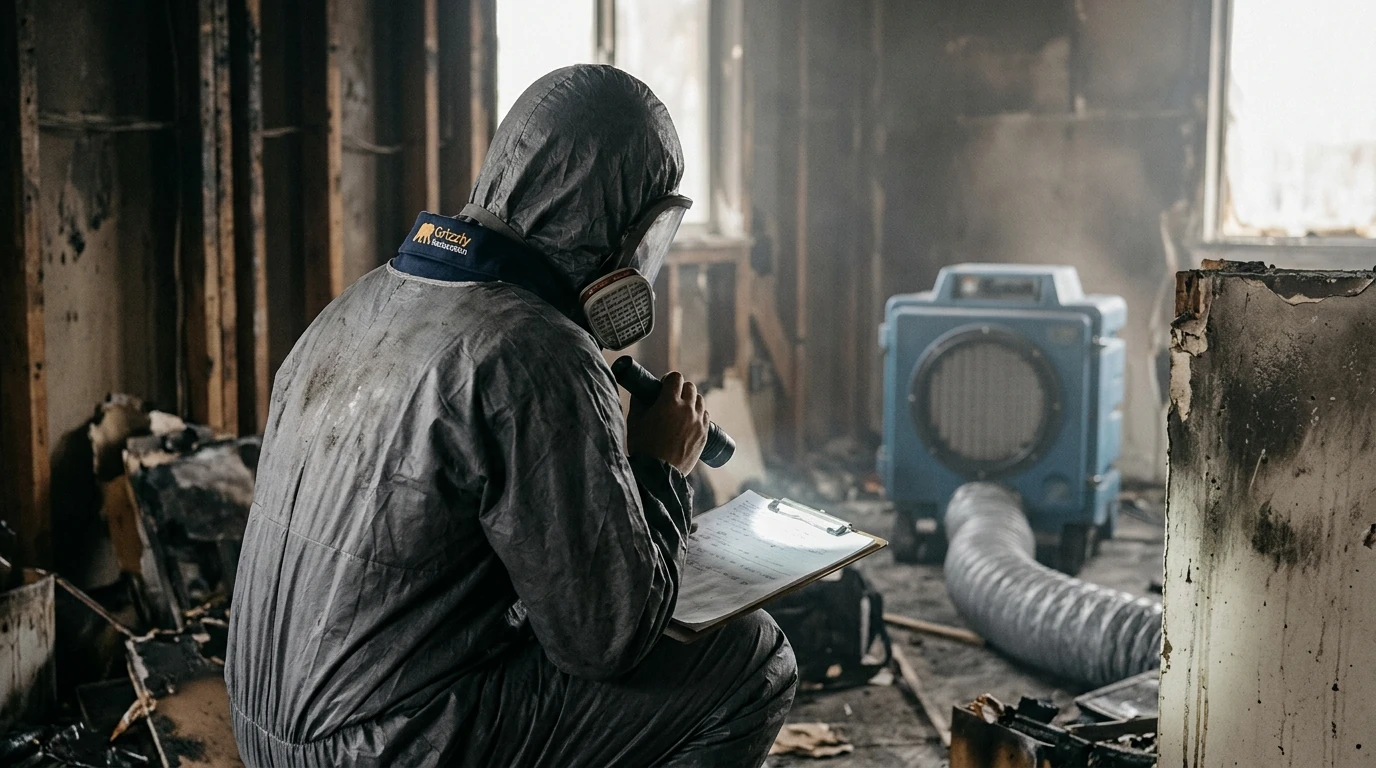
On the first call, have the property address, your insurance carrier and claim number if you have one, and a general sense of which rooms the fire reached versus which rooms took on smoke damage only. The crew’s first visit typically covers emergency board-up and tarping, a walkthrough to assess structural and smoke damage, and an initial moisture and soot assessment that becomes the basis of the written scope your insurer will review. For a full walkthrough of what happens after that first visit, see the fire damage restoration process.
What should you throw away after smoke damage, and what can be cleaned?
Throw away anything porous that sat in heavy smoke or soot for more than a day or two: pantry food (even sealed boxes, since smoke odor penetrates cardboard), opened cosmetics and medications, and soft goods that were close to the fire source. Most fabric, hard goods, and many electronics can be professionally cleaned rather than replaced.
Contents cleaning uses different methods depending on the item: ultrasonic cleaning for hard goods, ozone or hydroxyl treatment for odor in fabrics and furniture, and specialized soot-removal sponges for walls and surfaces before any wet cleaning touches them (wiping dry soot with a wet rag first just grinds it into the material). Items that need time away from the structure, so cleaning and deodorizing can happen without re-contamination, typically go into a documented pack-out through contents restoration and storage rather than sitting in a damaged home.
How long does fire damage restoration take?
A single-room fire with light smoke spread often wraps up in one to two weeks; a whole-house fire with structural rebuild can run two to six months. The range depends on how much of the home needs reconstruction versus cleaning, how quickly the insurance scope is approved, and whether specialty trades like electrical or HVAC need to sign off before drywall goes back up.
The mitigation phase, board-up, soot and odor removal, structural drying if hose water was involved, usually moves fastest because it’s the part insurers approve quickest. Reconstruction is the phase that takes longer, since it depends on permitting and material lead times as much as labor.
Getting the call order right in the first few hours protects both your family and your claim. Once the scene is safe and the fire department has cleared it, work down the list: insurer, shelter if needed, a licensed restoration company, and utilities, and you’ll have documentation and protection in place before the first night is over.
About this guide
This guide was prepared with the Grizzly Restoration team, IICRC-certified technicians (license #1107432) serving Fresno, CA and surrounding communities including Clovis, Sanger, Selma, Fowler, and Kerman since 2023. Their technicians hold IICRC FSRT fire and smoke restoration certification and the company operates a 24/7 response line for fire damage restoration, emergency board-up, and contents restoration calls.