TL;DR: The best smoke damage restoration company in Fresno treats soot and odor as their own specialty, not an afterthought bolted onto fire cleanup. Look for IICRC Fire and Smoke Restoration Technician (FSRT) certification, a written scope before work starts, HVAC and duct odor testing, and in-house contents cleaning or pack-out storage. A contractor that only tarps roofs and tears out drywall after a fire often subcontracts the soot and odor work to someone else.
If a grease fire stayed contained to your kitchen, or a neighbor’s structure fire pushed smoke through your attic vents, you’re dealing with a smoke-only loss: soot film on walls and ceilings, a burnt smell that won’t quit, and contents that need cleaning before they go back in the house. That’s a different job than full fire reconstruction, and not every fire restoration contractor in Fresno treats it as its own discipline. Grizzly Restoration, IICRC-certified technicians based in Fresno with a 5.0 Google rating, holds Fire and Smoke Restoration Technician (FSRT) and Odor Control Technician (OCT) certifications and handles soot removal, HVAC odor remediation, and contents pack-out as dedicated work rather than a side task.
What makes smoke damage restoration different from fire damage restoration?
Smoke damage restoration focuses on soot residue and airborne odor that travel well beyond the burn area, not on structural rebuild. A fire that burns for ten minutes in one room can push smoke through return air ducts and settle soot on walls two floors away, long after the flames are out.
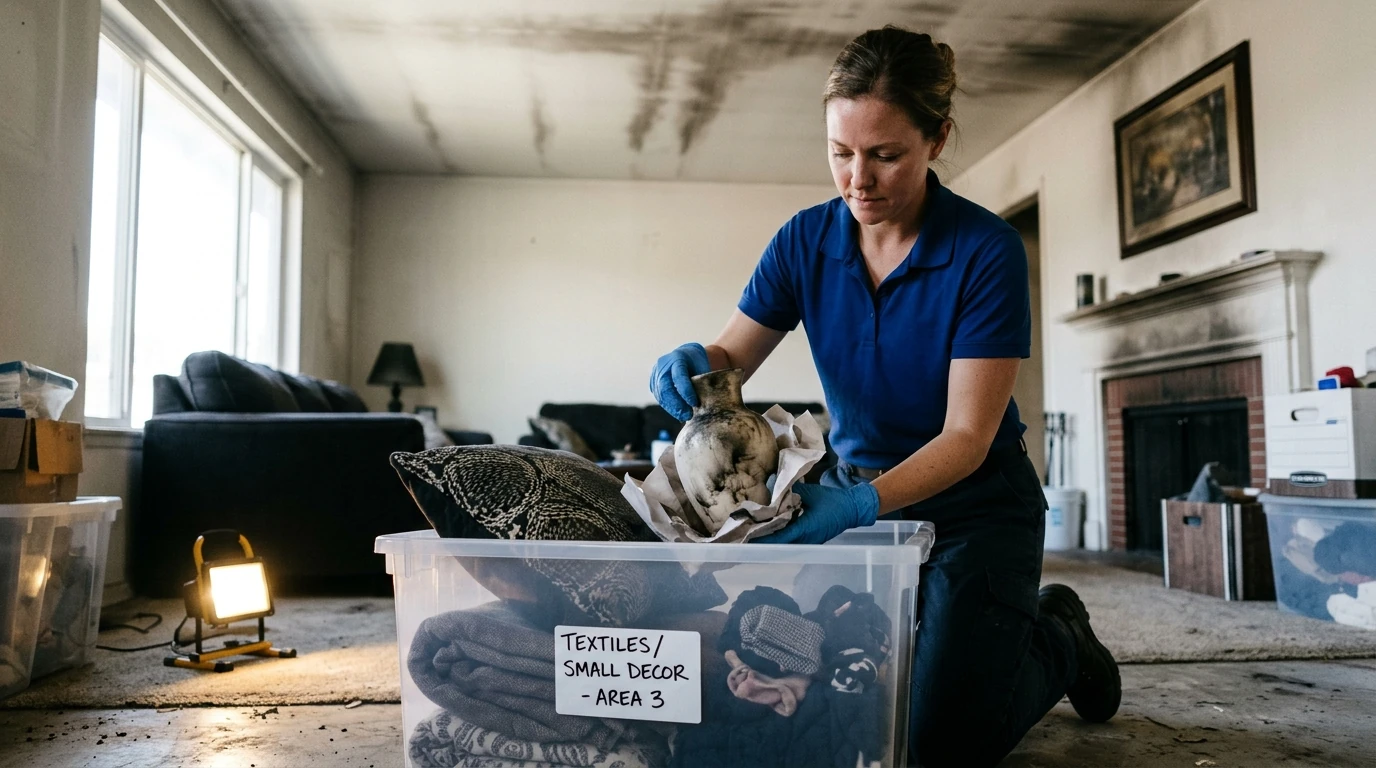
That means the scope of work looks different: HVAC and duct cleaning, thermal fogging or hydroxyl treatment for odor, wipe-down or media blasting of soot on hard surfaces, and a contents inventory for anything that absorbed smell (fabric, upholstery, unsealed wood). Full fire restoration adds charred-structure demolition, framing repair, and reconstruction on top of that. The industry standard for both is the ANSI/IICRC S700 Standard for Professional Fire and Smoke Damage Restoration, which spells out how soot type (dry, wet, protein-based) should drive the cleaning method. If your loss is closer to full structural fire damage, our fire damage restoration page and our guide to choosing a fire damage restoration company in Fresno cover that comparison separately.
What should you ask before hiring a smoke and odor removal company in Fresno?
Five questions separate a company that specializes in smoke and odor from one that treats it as a checkbox on the way to reconstruction.
- Do you specialize in soot removal, or is it a line item inside a bigger fire job? Ask what percentage of their work is smoke-only losses. A company that rarely sees these jobs may not own soot sponges, chemical sponges, or media blasting equipment.
- How do you handle odor that’s gotten into insulation or the HVAC system? Surface cleaning doesn’t fix a smell trapped in attic insulation or ductwork. Ask specifically whether they inspect and treat the HVAC system, not just the rooms you can see.
- Are your technicians IICRC certified in fire and smoke restoration? FSRT certification means a technician trained specifically on smoke behavior and soot chemistry, not just general water or mold credentials.
- Will you work directly with my insurance adjuster? Smoke-only claims still involve documentation: photos, a line-item scope, and often a contents inventory. A company that’s done this before can speed the claim along.
- Can I get a written scope of work before anything starts? A specific scope (what’s being cleaned, what’s being replaced, what contents are going off-site) protects you from surprise charges later.
Who handles smoke damage restoration in the Fresno area?
Several companies do restoration work across the Fresno area, including national brand BELFOR, the local SERVPRO franchises covering Fresno SE and Fresno NW, Olsen Construction & Restoration, and Central Cal Restoration. All of them handle some form of fire and water cleanup, and the checklist above is the honest way to compare them, since public rating and review data for smoke-specific work isn’t something we can verify for every listing.
Grizzly Restoration, licensed in California (license #1107432) and available 24/7, built its process around the five questions above: FSRT and OCT certified technicians, HVAC and duct odor inspection as a standard step (not an add-on), insurance documentation handled in-house, and a written scope before any cleaning or pack-out begins. Central Valley fire season means wildfire smoke from the Sierra foothills regularly drifts into neighborhoods from the Tower District to Fig Garden, leaving a stale smoke smell in homes that never had flames anywhere near them. That’s a real, recurring version of this problem, not a hypothetical.
What happens during a professional smoke and odor removal job?
A professional smoke and odor job runs in roughly four phases: assessment, source removal, deep cleaning, and odor sealing.
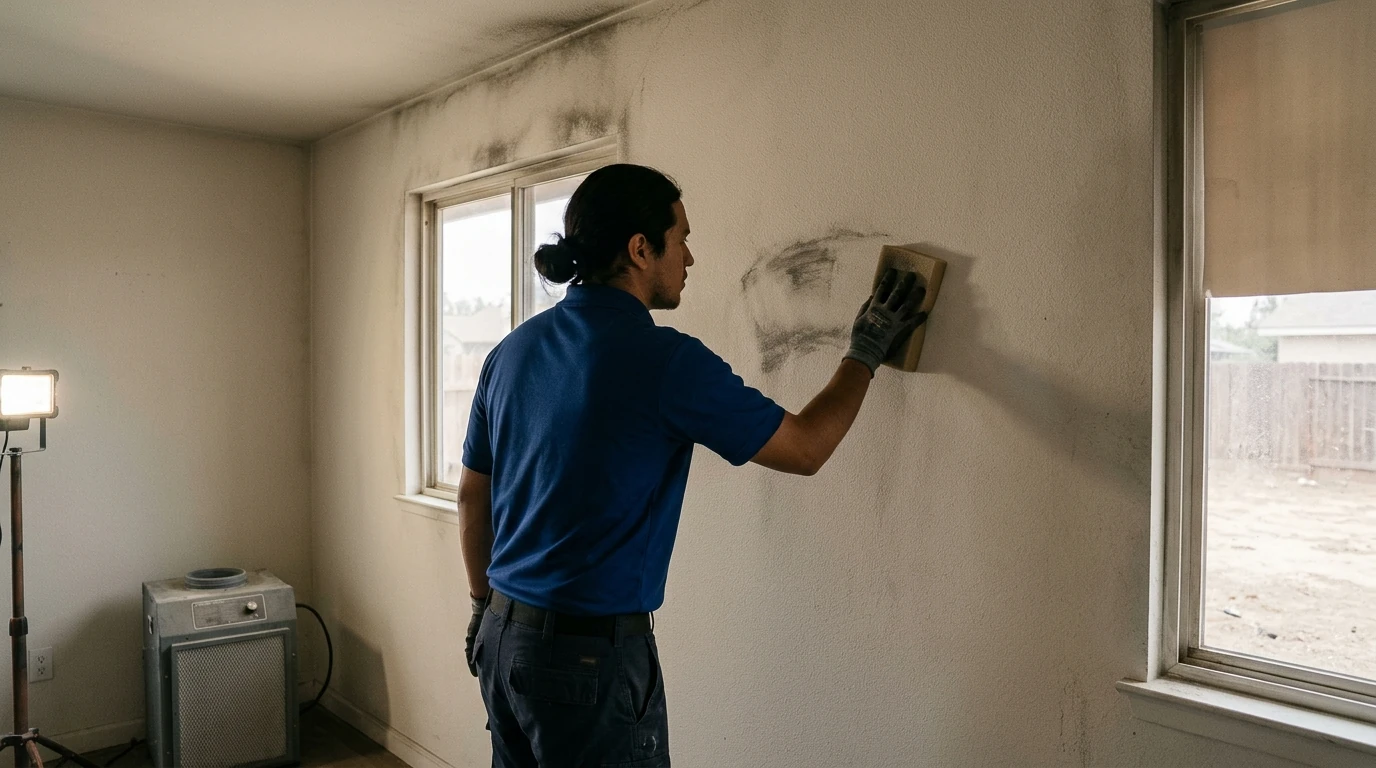
First, a technician identifies soot type and odor source, including checking the HVAC system and attic space, since smoke rises and spreads through air movement long before it settles. Second, loose soot gets removed with HEPA vacuums and dry sponges before any wet cleaning, because wiping dry soot with a wet rag can grind it into porous surfaces. Third, affected surfaces get cleaned with the method matched to the material: chemical sponges for porous drywall, solvent cleaning for hard surfaces, and specialized cleaning for fabric and upholstery that’s headed to a contents restoration and storage facility. Fourth, odor gets addressed directly through thermal fogging, ozone, or hydroxyl generators, depending on the severity, which is what separates actual odor removal from an air freshener masking the smell for a week.
If you’re unsure which stage your situation needs, our guide to choosing a restoration company in Fresno walks through the broader vetting process, including licensing and insurance checks, before you sign anything.
If soot has settled into your walls or a burnt smell has taken over your HVAC system, request a smoke and odor assessment at (559) 417-5369 before you start cleaning surfaces yourself; wiping soot the wrong way can grind it deeper into drywall and fabric.